All

Meet David Moon, the Head of R&D and Recruiting
by RISE Education Korea
RISE Education Korea (1/2)
Meet David Moon, the Head of R&D and Recruiting

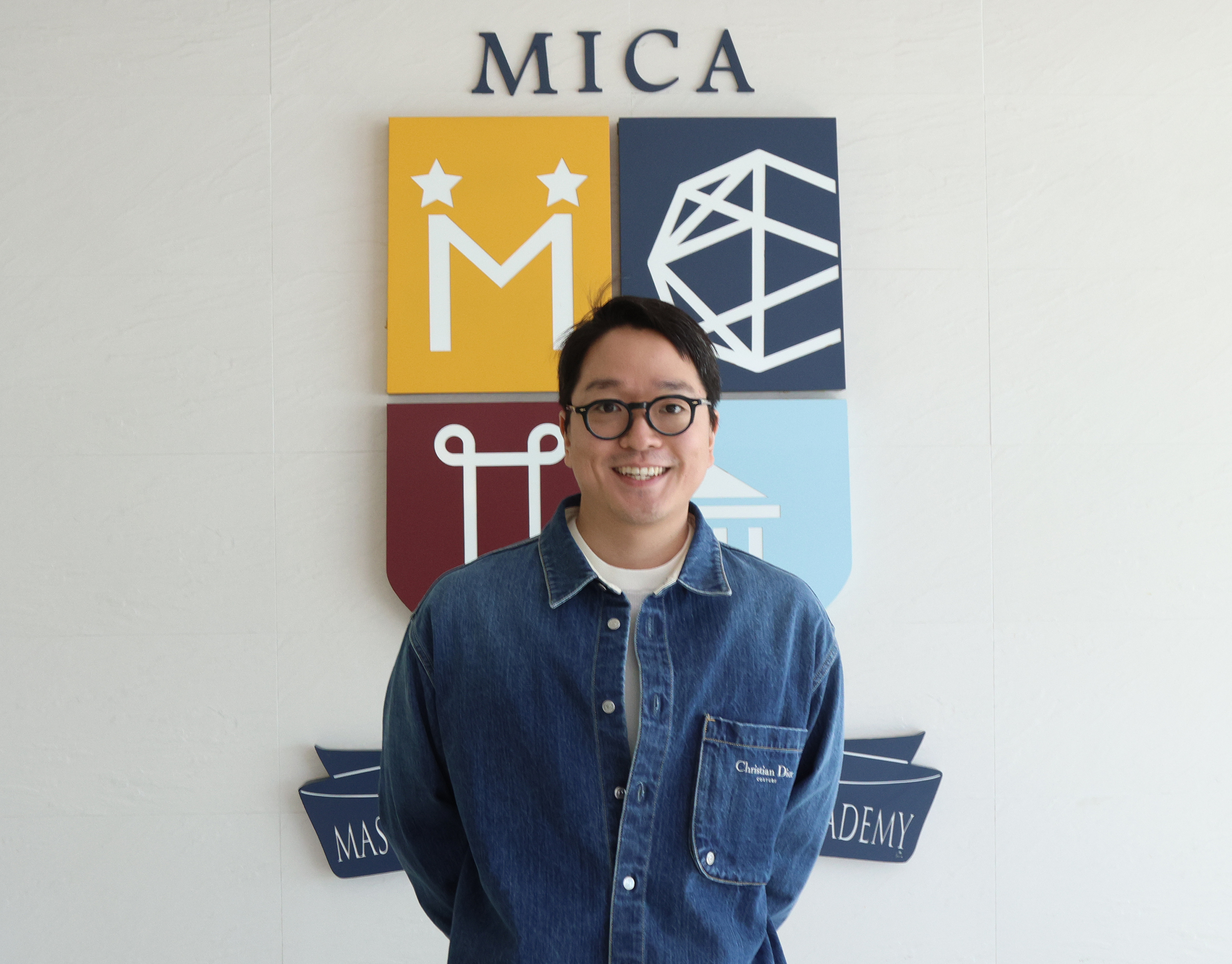
HR Manager Self QnA: David Moon, the Head of R&D and Recruiting My name is David Moon. I am a Korean Canadian who came to Korea in 2003. I have been employed by various academies, but I truly enjoy working at RISE Korea Education. I always wanted to change the English Education that children received. I wanted to help students learn naturally. I wanted our students to have fun while learning. All this was possible because RISE Korea Education truly cares about each individual student. We understand that students’ happiness can only arise from our teachers’ happiness and we endeavor to make that possible through our policies, faculty, and methodologies. Education & Curriculum Q: What is the mission of RISE Korea Education Korea? A: Our mission is to provide an immersive learning environment using the best education technology. In order to accomplish this, we use the Natural Approach methodologies in our classrooms.  Q: What makes RISE Korea Education stand out from other English kindergartens in Korea? A: Our motto is “happiness and safety”. It is true that happiness occurs when a student is having fun. However, we believe that true happiness can only occur when the learning process is a fun process. We are not focused on drilling and giving a lot of homework. We are more focused on having meaningful conversations with our students, understanding our students, and teaching the way our students learn. Q: How does the curriculum help teachers succeed? A: RISE Korea Education provides all the material necessary for classes. From assessments, worksheets, handouts, flashcards, pacing guides to touch-screen TV and E-books. All Rise books have been digitized to allow more engagement in classes. We don’t provide a lesson plan but rather a pacing guides. This allows teachers to be creative in their teaching within the framework of the overall curriculum. Just as all students learn differently, all teachers teach differently. Teachers will learn of RISE Korea Education methodologies and learn to apply them to their teaching style. Q: What are the class size and student-to-teacher ratio? A: The maximum class size is 12 students. Our kindergarten classes usually have 10~12 students. However, our afternoon classes with elementary students have an average of 8 students. The student-to-teacher ratio varies but it is usually about 25~30 students per teacher. For Teachers Q: What can RISE Korea Education offer to teachers that make it stand out? A: When we ask teachers what they like about Rise, they mention students, fellow teachers, and the program.  As our methodologies revolves around questions and as a result, RISE Korea Education students learn to speak quickly and proficiently. Our class are dynamic where thoughts are shared and discussed with peers. Being able to communicate with students, our teachers form a special bond with students based on respect and trust. Our schools are not small. Our smallest school services 8 Foreign teachers and our biggest school services 25 Foreign teachers. Each school has its own culture and teachers never feel alone. All our teachers are friendly and caring of the school, students, and teachers. As RISE Korea Education program is not meant to be about drilling, teachers are not burdened with test results. Also, since all the material are provided to our teachers, they feel prepared for classes without spending a lot of time with preparations. Finally, RISE Korea Education adheres to the Korean labor laws. All RISE Korea Education schools close during Korean national holidays. We also ensure that all our teachers receive the paid holidays every year. With this, our teachers enjoy a balanced life with work being restricted to the school and enjoyment outside.  Q: What kind of teachers do you look for and the qualities they should possess to work at RISE Korea Education? A: We look for teachers whose educational philosophies align with RISE Korea Education. Also, as we are educating kindergarten and lower elementary students, we look for teachers who show passion for teaching and compassion for our students. Our students are humans, something we forget at times due to their age. All our students go through struggles and we need to emphasize with them and try to understand what they are going through. Furthermore, we want our teachers to be consistent and fair when dealing with students. Teachers are humans as well. We all have our favorites but when we make a class policy, it needs to be reinforced consistently and the fairly to all students. Lastly, we look for teachers who are willing to learn and improve their teaching.  Hiring & Training Q: What is your hiring process like and what are some tips that you would give to applicants to help them nail their interview? A: Our interviews are meant to understand each other. RISE Korea Education is looking to see if a teacher would be a good fit for RISE Korea Education. On the other hand, the candidate should be looking to see if RISE Korea Education would be a good fit for them. In order to accomplish this, the candidate should be honest about their answers. When they try to predict the response, we are looking for, that usually leads to inconsistent responses. We want to know who you are. Q: What kind of career development opportunities do you offer at RISE Korea Education?  A: A lot of our teachers stay a lot longer than a year. Some of our teachers have been with us for 5 years. Our experienced teachers will be provided with an opportunity to be a Head teacher, helping the campus with training and teacher supports. Also, RISE Korea Education HQ is constantly on the lookout great teachers to help out with content development. RISE Korea Education R&D currently employ former RISE Korea Education teachers who have acquired the “F” visas.  Q: Do I need to have teaching experience or a teaching license to work at RISE Korea Education? A: Teaching experience and teaching license is not required to work at RISE Korea Education as we provide sufficient training to help new teachers get started. However, they will increase the salary that is offered to you. Q: What are some things that you provide your teachers with to help them develop? (Training, seminars, etc) A: RISE Korea Education initial training consists of three parts, Zoom training, video training, and job shadowing.  All training is compensated on an hourly basis and ends before the contract start date. Although the initial training is great to helps teachers get started, it does not immediately produce great teachers. RISE Korea Education schools provide a lot of supports from the vice principal, academic coordinators, and head teachers who are always looking for ways to assist our teachers. With feedback, workshops, and mock teaching sessions, our teachers transition from being a good teacher to being a great teacher. Q: Lastly, what is one thing that you find most difficult about your position? A: There are so many great candidates with various backgrounds. Each brings with them their own beliefs and skills. Trying to determine who would be a good fit for RISE Korea Education is truly difficult. Also, RISE Korea Education has so much to offer to our teachers. The 1-hour that the candidate and I share in an interview is too limited to reveal all that the RISE Korea Education has to offer. Unfortunately, we have made mistakes and will continue to make mistakes. However, we endeavor to continue to augment our interview process so that both the teacher and RISE Korea Education learn about each other.

Published Apr 18, 2024
About KICS
by KICS717
About KICS

Welcome to Korea International Christian School. Korea International Christian School was founded in 2004. Our school educates future Global Christian Leaders in both the Christian faith and high academic quality. We have campuses in Incheon and Seocho in Korea, as well as in the Philippines, and in Illinois, U.S. Over 1000 students are enrolled in our KICS schools from K5 to G12 and we also run an “online school.” KICS has three distictive charicteristics. First, all classes are taught in English using textbooks based on a Christian worldview. Secondly, we have gifted teachers teaching students with care and love. Students learn the value of life as well as academics together. Lastly, KICS not only has close relationships with Christian Universities such as Liberty University and Bob Jones University, but also with other top ranked universities such as UC Davis and SUNY-Stony Brook. Every year, over 60 graduates get accepted to top ranking universities with scholarships. Also, students may enroll in art and music school programs to expand their artistic talents. Professors support and educate the students to enable them to get enrolled in Art and music univerities in U.S. KICS online school is ground breaking online education program which has set a high standard in online Christian education in America. Furthermore, KICS online students can receive the same advantages KICS students. Our school is praying for and supporting many Christian schools across Asia and America. We believe that the talented spiritual Christian leaders raised in these Christian schools become global leaders.

Published Mar 25, 2022
Chungdahm Learning becomes Creverse
by TheWorknPlay
News and Current Hot Issue (1/2)
Chungdahm Learning becomes Creverse

Chungdahm Learning becomes Creverse.  Chungdahm Learning is a company that was established in 1998 and has already established more than 200 branches all over Korea. Chungdahm Learning focuses on English thinking skills and CMS Edu is a company that focuses on mathematics and coding skills. The two have merged this March to create Creverse.   With its name derived from combining the terms Creativity and Universe, Creverse plans to introduce convergence thinking skilled education aimed at fostering global talents by adding Edu-Tech technology.    In an interview with The JoongAng, the CEO Lee Chung-guk said that “the future belongs to our children. Cheongdam Learning and CMS Edu, which have pioneered the education market with 'thinking skills', take a leap forward on the path of nurturing future convergence talents with the launch of Creverse Co., Ltd. In a digital world without boundaries between countries, we need to have the ability to communicate smoothly in English and develop software and coding capabilities to actively cope with and solve changes brought about by future technologies.” 

Published Mar 23, 2022
No more quarantine: Entry into South Korea made easier
by TheWorknPlay
News and Current Hot Issue (1/2)
No more quarantine: Entry into South Korea made easier

Covid and Quarantine updates. As we adapt to the phase of living with covid, entry into South Korea has been made easier. Fully vaccinated entrees to Korea will be exempt from mandatory quarantine.    From March 21st, 2022, people vaccinated in Korea and have vaccination records registered in Korea via a public health center are exempted from the mandatory quarantine.  Registration records are available in the COOV online system.   From April 1st, 2022, people vaccinated abroad or in Korea with or without registered vaccinated records in Korea will be exempt from quarantine. Vaccination records will be linked to the new Q-CODE online system.   How to register Input vaccination records into the Q-CODE system prior to departure. A QR code will be issued through the Q-CODE website. Scan the QR code upon entry to South Korea. Only those vaccinated with a minimum of 3 shots with the vaccines approved by the World Health Organization qualify for the exemption.  PS: This includes the single Jansen shot administered 14 days before departure and within 180days. All entrees are still subjected to a PCR test taken within 48 hours of departure. A second PCR test upon arrival. And a final PCR test on the 7th day after arrival.  

Published Mar 23, 2022
Volunteer Blogger Recruitment
by TheWorknPlay
Blogger Recruitment (1/1)
Volunteer Blogger Recruitment

We are looking for volunteer bloggers.   Living and working in a new environment is not as easy as it sounds. For most, living abroad is more than just taking a step up the career ladder. This new and exciting experience may offer many possibilities but will also confront you with entirely new obstacles and issues. We can help each other with solving some of these issues by sharing information.  Why participate? By participating in content sharing through blogs, you can definitely improve your writing skills. If you ever plan to start blogging, you can get some cool tips from other bloggers or read through other blogs to get ideas on how to write or even what to write about. Also, don’t you just love that feeling you get after helping someone? I know I do. All information posted on our blogs will definitely be helpful to someone. Most people in need of information don’t know where to turn to or even how to ask for help. Let’s be their go-to person.   As an extra-curricular, this could turn out to be a very useful aspect of your CV. Apart from teaching experiences, some employers also check on your extra curriculum activities. Interacting with other ESL teachers and sharing useful information could look really good on your resume.   Through this;  We also hope to attract more ESL teachers to Korea through sharing the positive experiences and evaluations of ESL education in Korea.  We hope that the archived information can be useful to someone in the future or be a library where you can always visit to re-experience your Korean journey. See some of our blogs   How to participate? If you are interested in participating or for more information and inquiries, contact us at: theworknplay@gmail.com

Published Mar 8, 2022
The weather_Lesson Plan
by Kayla
ESL Lesson Plan Samples (1/8)
The weather_Lesson Plan

The Weather.   ▪ Title (Unit): The weather ▪ Grade (Level): Beginner ▪ Lesson Focus: Speaking and listening ▪ Objectives: 1. Students will identify actions and activities 2. Students will have fun and be active while learning. ▪ Key Expressions: How’s the weather? It’s sunny  ▪Keywords: Sunny, Snowy. Rainy, Cloudy, Windy, Stormy, Hot, Cold ▪ Materials: large and small picture cards, yoga mats, worksheet, balls, tape, pens, pencils, computer/tablet, colored pencils/crayons, and cones.    Procedure Details Presentation  Introduction of Content and Language  Have all the students sit down around the teacher ask them “How are you?”. Ask the students about their names. Introduce the lesson topic/ objective for the day.  Go over all of the new words and phrases. Introduce the new vocabulary for the day and explain the new phrases.  Practice a little bit with cards and elicit the students to respond using the full phrase.    Practice Students begin to work with language  Activity #1 Run to the Picture Lay one yoga mat under each picture and have another in the center of the room. Tell the students the center is the starting point. Count down from 3-2-1 and have the students yell, “How’s the weather?”. The students have to run to the mat under the picture matching the teacher’s response. Play until students are tired or you feel like they have a good grasp of the vocabulary.    Activity #2 Drop the Ball Game Set up upside-down cones or boxes on one side of the room and tape weather pictures to them. Have the small balls prepared on the other side by the students.  One by one the students will ask the teacher, “How’s the weather?”. After you answer the students will run and drop a ball into the correct cone and run back. Play until you have used all the balls or until every student has gone at least three to four times.   Activity #3 Song How's the Weather Song by Maple Leaf Learning Play the weather Song here    Activity #4 Vanishing Card Game  Show the kids a group of vocabulary cards. Set them all out in front of you and tell the students they will need to remember the cards. Then instruct the students to close their eyes or put their heads down. Remove one of the cards from the set and place it out of sight. Make them guess which card has been removed.   Activity #5 Vocab with Rock, Scissors, Paper Lay the flashcards in a straight line on the floor. Assign two teams and have them line up at each end of the flashcard line. When you say 'Go' the first member from each team starts to walk from their end of the line, straddling the flashcards, reading the vocabulary out loud as they walk. When the two students meet, they have to Rock, Scissors, Paper, the losing student goes to the back of his/her line and the winning student continues along the flashcard line. The second student from the losing team starts walking and reading the vocabulary until the two students meet and Rock, Scissors, Paper, and so on. Production Students internalize and use language  Activity #6 Card Slap   The students will lay out their set of cards in front of themselves.  They will start with their hands on their head. The teacher will say, 3…2…1 and then have the students yell, “How’s the weather?” and the teacher will answer. The students will slap and grab that card and show it to the teacher. Repeat and play for as long as the students are happy and enjoying themselves.   Activity #7 Draw the Weather Worksheet Assessments or Other Work Ask the students a question about today’s lesson and after they have answered give them a piece of candy or sticker and let them go out to their guardian.  Make sure the room is cleaned up completely, lights and air conditioner are off and close the door to the room.

Published Feb 23, 2022
The Spining Coin Open Class_Lesson Plan
by Kayla
ESL Lesson Plan Samples (1/8)
The Spining Coin Open Class_Lesson Plan

The spinning coin   ▪ Date: 2022.01.01 ▪ Title (Unit): The spinning coin ▪ Grade (Level): Grade 3 ▪ Lesson Focus: Similes  ▪ Objectives: Students will be able to recognize and create similes.  ▪ Keywords: Fast, flat, slippery, pale, sharp, black, blind, thin, colorful, light, noisy, wise ▪ Materials: PowerPoint, A4 Paper, Worksheets    Procedure Details Presentation Introduction of Content and Language  (Time: 10m) Greet the students as they enter the class. Review the content from the previous lesson. Briefly go over any useful vocabulary or expressions from that class.  Start PowerPoint on new material. Introduce what a simile is and explain when you use it. This will be intertwined with teaching and explaining any new vocabulary the students are unaware of. Make sure to have the students repeat after the teacher so that they are practicing not only writing, but listening and speaking.   Practice Students begin to work with language  (Time: 15m ) During the last part of the PowerPoint, students will have to fill in blanks on certain slides. This will start them practicing the expression structure and using the correct vocabulary.   Once the PowerPoint is complete and the students have a grasp on the target language the students will complete a worksheet. The worksheet will work as practice for the students and an assessment for the teacher. The teacher will move around the room assisting and monitoring the student’s progress and understanding.   Production Students internalize and use language  (Time: 20m ) Students will be given an example of a comic and an explanation of what is expected from them. They will have to use multiple similes to create a comic story.   They will first write down their script on an assigned worksheet.  Once that has been checked by the teacher for spelling and grammar they will be able to start drawing and creating their comic strip.  The strip should be between 5-6 boxes in length.   The students will most likely not be able to finish their comic strips in the remaining time.  They will give their work to the teacher and will finish up the comics the following lesson.  Once all the comics are complete the students will present them to the class.   Assessments or Other Work (Time: N/A  If the students finish during the lesson they will present their comics in the remaining time. ▪ Anticipated Problems & Solutions -The students take longer than expected on the worksheet Solution: Make sure to introduce the comic strip activity so that we can start it immediately in the following lesson.  

Published Feb 23, 2022
Directions_Lesson Plan
by Kayla
ESL Lesson Plan Samples (1/8)
Directions_Lesson Plan

Directions ▪ Date: 2022.01.01 ▪ Title (Unit): Directions ▪ Grade (Level): Grade 3 ▪ Lesson Focus: Speaking, listening, and writing  ▪ Objectives: Students will be able to…give directions from point A to B ▪ Key Expressions: Go right, left, straight / Next to / Between ▪ Materials: PPT, code paper worksheet, whiteboard, a prize for the winner    Learning Stage Teaching Model Activity  Introduction Warm-up 5mins  ◎ Greetings • How’s it going?   - Good. / Great. / Not so good. / Not bad.   ◎ Review and set up the learning objective Let’s review the expressions and keywords with PPT. • Constructing directions. - ex. Go straight two blocks and turn left at the market.   • Emphasize using “at the _______” format. • Review “next to” and “between” • Students will be expected to answer questions presented to them. ◎ Presentation of the learning sequence Activity 1. Review sections A-D Activity 2. Now I Can Activity 3. Writing Game (Egyptian Code Game) Developments Activity  5mins ◎〔Activity 1〕Review Sections A-D • Open your books to page (number). Listen to the teacher and follow along in your books. In section ‘A’ please listen to the dialogues and find the locations they are talking about on the CD. Write the corresponding numbers correctly with the locations.  • In part ‘B’ we will practice listening and reading. You will need to listen to the dialogue and then choose the correct choice. Circle one of the two options in the parentheses. We will listen to each sentence two times. • Part ‘C’ will be dialogue practice. Look at the pictures and talk about them with your partner. Ask and answer how to get to different places on the map. After everyone has practiced for 4 minutes, we will have volunteers show some examples. • Part ‘D’ is a writing exercise. Look at the pictures and read the sentences. There are some errors in the underlined parts. Find the errors and write the correct sentences.   ◎〔Activity 2〕Now I can • On the bottom of the page you will see a map of Jane’s town. She visited two places that day. You need to write the directions from her house to the museum and Kayla’s restaurant.    ◎〔Activity 3〕Egyptian Code Writing Game • Let’s play the code writing game.    1. We will separate into teams of 4.  2. Two students will have the code paper and two students will be writing on the whiteboard.  3. When the teacher says ‘go’ the people with the code paper will look at the TV. They will have to check the code and tell the other students what to write.  4. Once they have completed the code, they raise their boards and points will be awarded based on speed.  5. Spelling, punctuation, and capitalization are important and necessary to receive points. Consolidations   ◎ Review • Let’s review the key expressions.    - Go straight and turn left.   - It’s next to the _______________.   - It’s between the __________ and the ___________.   ◎ Guiding for the next class • We’re going to start lesson 5 next week.  

Published Feb 23, 2022
Opinions_Lesson Plan
by Kayla
ESL Lesson Plan Samples (1/8)
Opinions_Lesson Plan

Opinions   ▪ Date: 2022.01.01 ▪ Title (Unit): Opinions ▪ Grade (Level): Middle school ▪ Lesson Focus: Speaking and listening  ▪ Objectives: 1. Students will be able to…Express their own opinions 2. Students will be able to…Agree 3. Disagree with other student’s opinions ▪ Key Expressions:  1. Do you agree with? 2. Yes, I agree because… 3. No, I disagree because… ▪ Materials: PPT, gap-fill worksheet, bingo board, whiteboard, a prize for the winner    Procedure Details Presentation Introduction of Content and Language Describe activities that will introduce students to a new language, or activities that will refresh the language for review. Time: 10m 1. Greetings: Welcome students to class and ask simple questions about the day. 2. Warm-up Activity -All the students stand up. Have the teachers make statements which force students to make their own opinion. The teachers will ask questions along with using hand gestures and if they agree with the statement given, they will remain standing. If they disagree, they will sit down. This process will be repeated multiple times to get students engaged in the new vocabulary.    3. Introduction of material. PPT slides defining keywords and expressions.   Practice Students begin to work with the language. Time: 10-15m 1. The teacher will present PPT slides with dialogue.  The PPT will show images and videos along with text so that the students are able to grasp the material. (Ex: Image of Kimchi is shown with the statement ‘Kimchi tastes so good!’ and teachers use the target language to express if they agree or disagree, followed by answering why they agree or disagree). We will then ask a few students if they agree or disagree with the same question the teacher has just answered.  2. After multiple slides of different images and questions, students will be given a gap-fill worksheet similar to what was practiced on the PPT to work on individually. Production Students internalize/master and use language Describe the activities that show how students will use language to communicate with peers or how students will use reviewed language to communicate with their peers Time: 15-20m   1. Opinion Bingo- Students will receive a bingo board with opinionated statements in the boxes. They will have to move around the classroom and find students who agree or disagree with the statements and have those students circle the agree/disagree symbols in the box and sign that particular box. The First-person to get a Bingo yells ‘BINGO’ and the game is over.   2. Once student yells BINGO they have to present to the rest of the class the people on their board and their corresponding statement.   Assessment / Extension Activities / Home fun Assign any additional work that assesses or reinforces the students’ mastery of the lesson objectives. Time: 5m 1. Before students leave the room, they are asked a question by the teachers. They have to respond with their opinion.  If they are unable to respond they move to the back of the line and if they are able to answer they are able to leave the class.     ▪ Anticipated Problems and Solutions Have time left over at the end. (Solution: play short video clips and ask their opinions on them) Students argue amongst each because of differing opinions (make sure to explain during presentation how everyone is entitled to their own different opinions.)  

Published Feb 23, 2022
Food and Health_Lesson Plan
by Kayla
ESL Lesson Plan Samples (1/8)
Food and Health_Lesson Plan

Food and Health   ▪ Date: 2022.01.01 ▪ Title (Unit): Food and Health ▪ Grade (Level): All ▪ Lesson Focus: Speaking and listening  ▪ Objectives: 1. Students will be able to advertise a specific food item. 2. Students will be able to comprehend words related to cooking and taste.  ▪ Key Expressions: 1. grilled, boiled, baked, fried, pan-fried, tossed, steamed, pickled, fermented  2. Salty, sweet, sour, spicy, bitter, savory  3: airy, crunchy, crispy, creamy, oily, and chewy  ▪ Materials: PowerPoint, sample menus, YouTube video of advertisement, worksheet    Procedure Details Practice: Students begin to work with language  (Time: 00:00) Teachers will distribute sample menus for the following familiar cuisines: Korean, Indian, American, Chinese, Japanese, Italian, Vietnamese, and Turkish. One menu will go to each table of students. Each table will also receive a picture dictionary of ingredients.  NET will do a listen and repeat exercise, to ensure pronunciation of ingredients.  Teachers will show a video and tell students to listen to how a food is cooked and the ingredients. Production: Students internalize and use language  (Time: 00:00) Students will be given a worksheet to guide them in making their advertisements.  At their tables (in groups of 4-5) students will review their menu and create a new dish. They must create an advertisement for their restaurant and the new dish by following the guidelines on the worksheet. Students are encouraged to be creative. Students will present their ads to the class. Each student must speak once during their presentation.  Teachers will ask concept check questions to the class to ensure their understanding of their classmates’ presentations.  Students will vote on the best advertisement.  Assessments or Other Work  (Time: N/A) Teachers will distribute worksheets. Two students from each group will be the waiters/waitresses. The remaining students are customers. They must visit each restaurant and order food using the dialogue on the left-hand side of their handout. Students should record their interactions in the allotted spaces.  

Published Feb 23, 2022
Dream Jobs_Lesson Plan
by Kayla
ESL Lesson Plan Samples (1/8)
Dream Jobs_Lesson Plan

What do you want to be?    ▪ Date: 2022.01.01 ▪ Title (Unit): Lesson 1 – What do you want to be when you grow up? ▪ Grade (Level): All levels, Grade 1 and 2 ▪ Lesson Focus: speaking and listening ▪ Objectives:    1. Students will be able to talk about what they went to be in the future. 2. Students will describe different jobs and their roles. ▪ Key Expressions:  1. I want to be …, because … 2. He/She is a [job title]. Her/His job is to [job role]. ▪Materials: Small whiteboards (or blank sheets of A4 paper) for team drawings.   Procedure Details Presentation Introduction of Content and Language  (Time: 00:00 Show some pictures of different jobs and ask students what they want to do after they graduate, and why. Ask how about being a teacher? Introduce some job roles before introducing the job name. Check the understanding of all the introduced job names. Choose a student to randomly select one of the jobs, and explain why they want to do that job in the future. Repeat with a few more students. Practice Students begin to work with language  (Time: 00:00) Classroom discussion. Ask students what they think the best-paid jobs are. What are the pros and cons of these jobs? Ask about the most dangerous jobs in the world? Show movie clip “Ten Most Dangerous Jobs in America”. Talk about the pros and cons of some of these jobs. Production Students internalize and use language  (Time: 00:00) Play Taboo. Arrange the class into three or four teams, each with a team captain. In turn, the team captains come to the front and describe five jobs in English (without using 3 specified words). If their team gets the right answer, they get a point. If any other team gets it right, no one scores. If needed, repeat with another set of team captains. Extra Time Activity (Time: 00:00) Ask students what they think the best job in the world is. Show some slides of “dream jobs”. Discuss the pros and cons of these jobs. Ask what students think is the worst job in the world. Show some slides of “worst jobs. Ask students in their teams to design and draw a dream job and a worst job. They can then present these to the class. If time, all the teams can vote to find the best dream job. OR: For lower-level classes, skip the Taboo game and spend more time on this activity. ▪Anticipated Problems & Solutions Many students at this school may have the same job in mind after school. So, we can talk about dreams and bad jobs to elicit more different answers.

Published Feb 23, 2022
World Foods_Lesson Plan
by Kayla
ESL Lesson Plan Samples (1/8)
World Foods_Lesson Plan

 Worlds Foods ▪ Date: 2022.01.01 ▪ Title (Unit): Lesson 1 – World Foods ▪ Grade (Level): Grade 1 ▪ Lesson Focus: World foods and ordering at a restaurant ▪ Objectives:     1. Students will be able to identify different world foods  2. Students will be familiar with dialogue to order at restaurants ▪ Key Expressions:   1. May I take your order?  2. How much is it?  3. Yes, I’ll have_________  ▪ Keywords: taste, find out, look for, cart, hotdog, pretzel, beaver, tail, real, flat, thick, crowded, stick, insect, even, starfish, yummy ▪ Materials: PowerPoint, Grade 1 Textbook, Comprehension Worksheet, A4 Paper   Procedure Details Presentation: Time: 15mins Greet the students and ask them how they are doing. Introduce today’s topic: “World Food”. Pass out the worksheets for students to make English to Hangeul translations. The translations will be for all of the new vocabularies.  Go through PowerPoint exhibiting the new vocabulary, as well as, new and different world food that the students are unaware of. During the PowerPoint, it is essential to present the new dialogue as well.  Elicit dialogue from students when presenting new food. Procedure   Details Practice: Time: 10-12mins Open the textbooks to page(number). Begin reading “The World’s Street Food”.  Have the students read one sentence at a time followed by the next student doing the same. Continue in that manner until the entire story has been read.  Once the students have finished reading the teacher will read the story back to them. This makes sure that they are able to check the pronunciation and rhythm of the story.   Give the students a quick True/False worksheet after reading the story to make sure that they have interpreted it fully and correctly. Procedure ‌ Details Production: Time: 10-12mins Have students create their own menu. They will work in groups of 3-4 during this section. They will have 10 minutes to create a menu. They will choose 5 items that were taught to them during the lesson.  They can choose other food items that are not in the lesson, but can only use one Korean dish on their menu.   Once their menu is complete they will go around to other groups and place their orders. The teacher will present the students with example dialogue on the board so that they can resort back to it for help. ‌ Procedure ‌ Procedure Assessments or Other Work (Time: N/A ) If there is extra time, each group will present the orders that they have taken from the other groups. This will be a good way to practice and to teach more new dialogue. Example: What did he order? He(name) ordered the pizza and French fries. ▪ Anticipated Problems & Solutions:  -The students are having more trouble than expected with the dialogue Solution: Spend more time on the dialogue instead of doing the True/False worksheet. -Students are unable to create a proper menu because their English level is too low. Solution: Make the groups before class has begun so that every group has a high, medium, and low-level student.  

Published Feb 23, 2022